

What are the impact - resistance properties of sheet metal accessories?
As a trusted sheet metal accessories supplier, I've had the privilege of witnessing firsthand the crucial role that impact - resistance properties play in the performance and reliability of these products. In this blog, I'll delve into the details of what impact - resistance means for sheet metal accessories, why it matters, and how we ensure our products meet the highest standards.
Understanding Impact Resistance
Impact resistance refers to a material's ability to withstand sudden, forceful blows without breaking, deforming significantly, or losing its functionality. For sheet metal accessories, which are used in a wide range of applications from door locks to industrial machinery, this property is of utmost importance.
When a sheet metal accessory is subjected to an impact, several things can happen. If the impact is within the material's capacity, it may absorb the energy of the blow and return to its original shape. However, if the force is too great, the accessory may crack, dent, or even break apart. This can lead to malfunctions, safety hazards, and costly replacements.
Factors Affecting Impact Resistance
There are several factors that influence the impact - resistance properties of sheet metal accessories:
-
Material Composition: The type of metal used is a fundamental factor. Different metals have different inherent strengths and ductilities. For example, steel is known for its high strength and good impact resistance, especially when properly heat - treated. Aluminum, on the other hand, is lighter but may have lower impact resistance unless alloyed with other elements. Our company carefully selects the materials based on the specific requirements of each accessory. For instance, for Lock Core Linkage and Clips, we often use high - strength steel to ensure they can withstand the repeated impacts associated with normal lock operation.
-
Thickness of the Sheet: Generally, thicker sheets are more resistant to impacts. However, increasing the thickness also adds weight and cost. We strive to find the optimal balance between thickness and performance for each product. For Hardware Spring Plate, we use a thickness that provides sufficient impact resistance while still allowing for the necessary flexibility.
-
Manufacturing Process: The way the sheet metal is formed and processed can significantly affect its impact resistance. Processes like stamping, bending, and welding can introduce stress concentrations or alter the material's microstructure. Our advanced manufacturing techniques are designed to minimize these negative effects. For example, we use precision stamping to ensure uniform thickness and smooth edges, which helps distribute the impact forces more evenly across the accessory.
-
Surface Treatment: Applying a surface treatment can enhance the impact resistance of sheet metal accessories. Coatings such as galvanizing or powder coating can protect the metal from corrosion, which can weaken the material over time. Additionally, some surface treatments can improve the hardness and wear resistance of the surface, making it more resistant to impacts.

Importance of Impact Resistance in Different Applications
-
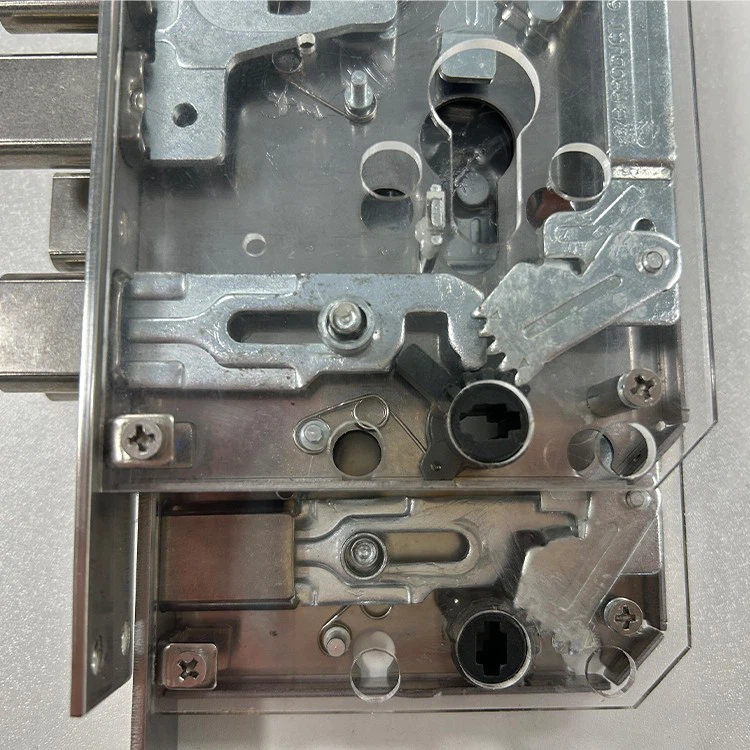
Door Lock Systems: In door lock parts, impact resistance is crucial for security. A lock that can withstand a strong impact from a forced entry attempt is more likely to protect the property. Our Lock Body Shell is designed with high - impact - resistant materials to prevent unauthorized access. It is engineered to absorb and disperse the energy from impacts, ensuring that the lock mechanism remains intact even under extreme stress.
-
Automotive Industry: Sheet metal accessories in cars are exposed to various impacts during normal driving and in the event of a collision. Components like brackets, clips, and panels need to be impact - resistant to maintain the structural integrity of the vehicle and protect the passengers. Our products used in the automotive sector are tested rigorously to meet the strict safety standards of the industry.
-
Industrial Machinery: In industrial settings, sheet metal accessories are often subject to heavy - duty use and accidental impacts. Accessories such as machine guards and covers need to be able to withstand these impacts to protect workers and prevent damage to the machinery. Our high - impact - resistant accessories ensure the long - term reliability and safety of industrial equipment.
Testing and Quality Assurance
We understand the importance of providing sheet metal accessories with reliable impact - resistance properties. That's why we have a comprehensive testing and quality assurance program in place.
We use a variety of testing methods, including drop tests, impact hammer tests, and dynamic loading tests. These tests simulate real - world scenarios to ensure that our products can withstand the expected impacts. For example, we conduct drop tests on our Lock Core Linkage and Clips from different heights to evaluate their ability to survive sudden impacts.
In addition to physical testing, we also perform material analysis to verify the composition and quality of the metals used. Our quality control team monitors every step of the manufacturing process to ensure that the products meet our strict standards.
Conclusion
The impact - resistance properties of sheet metal accessories are essential for their performance, reliability, and safety in a wide range of applications. As a sheet metal accessories supplier, we are committed to providing high - quality products that offer excellent impact resistance. Our careful selection of materials, advanced manufacturing processes, and rigorous testing ensure that our products can withstand the toughest challenges.
If you are in need of sheet metal accessories with superior impact - resistance properties, we invite you to contact us for a procurement discussion. We are ready to work with you to meet your specific requirements and provide the best solutions for your projects.
References
- "Metals Handbook: Properties and Selection: Irons, Steels, and High - Performance Alloys", ASM International
- "Manufacturing Engineering & Technology", S. Kalpakjian and S. Schmid