

In the design and development of modern mechanical systems, the utilization of different components plays a crucial role in determining the functionality and performance of the overall device. Among these components, the hardware spring plate is a common element known for its elasticity and durability. A question that often arises in engineering discussions is whether a hardware spring plate can be used in a flexible mechanism. As a reliable hardware spring plate supplier, we are here to delve into this topic and provide in - depth insights.
The Nature of Hardware Spring Plates
Hardware spring plates are typically made from high - quality metals such as stainless steel, carbon steel, or copper alloys. These materials are selected because of their excellent mechanical properties. For instance, stainless steel spring plates offer corrosion resistance, which is vital in environments where exposure to moisture or chemicals is a concern. Carbon steel spring plates, on the other hand, are known for their high strength and good spring characteristics.

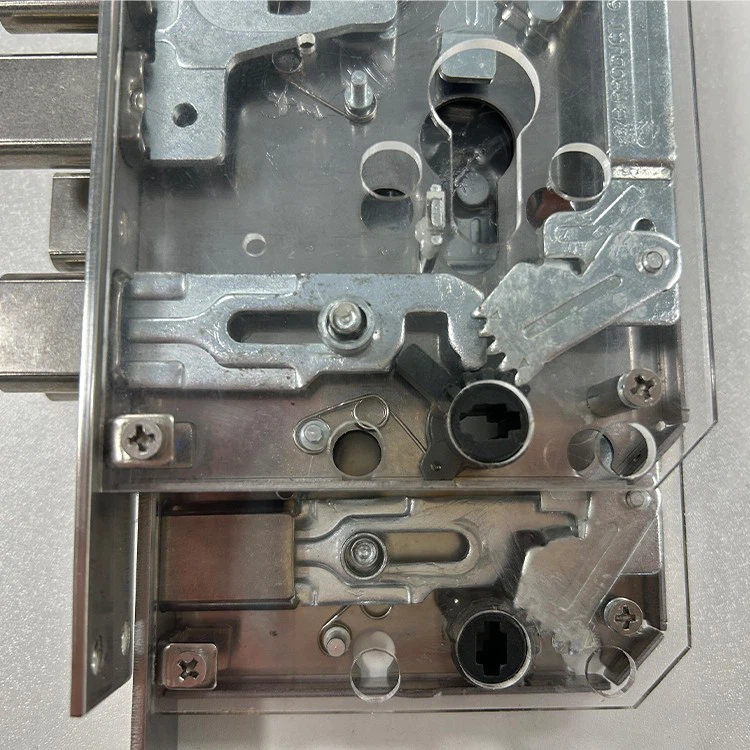
The manufacturing process of hardware spring plates involves stamping, heat - treating, and surface finishing. Stamping is used to cut the metal sheets into the desired shape, while heat - treating enhances the hardness and elasticity of the spring plates. Surface finishing, such as plating or coating, can protect the spring plates from wear and corrosion.
Characteristics of Flexible Mechanisms
Flexible mechanisms are designed to deform under an applied load and return to their original shape when the load is removed. They are widely used in various fields, including robotics, aerospace, and consumer electronics. The key characteristics of flexible mechanisms are their ability to provide smooth motion, absorb shock, and accommodate misalignments.
Some common types of flexible mechanisms include hinges, springs, and flexures. These mechanisms are often made from polymers, composites, or thin metals. The choice of material depends on the specific requirements of the application, such as the magnitude of the load, the range of motion, and the environmental conditions.
Feasibility of Using Hardware Spring Plates in Flexible Mechanisms
Advantages
- High Elasticity: Hardware spring plates have a well - defined elastic range, which makes them suitable for applications where a predictable amount of deformation is required. For example, in a flexible hinge mechanism, a spring plate can be used to provide the necessary rotational stiffness while allowing for a certain degree of angular deflection.
- Durability: Due to the high - quality materials and manufacturing processes used, hardware spring plates can withstand repeated loading and unloading without significant fatigue. This is particularly important in flexible mechanisms that are subjected to cyclic motion, such as the joints in a robotic arm.
- Precision: The stamping process allows for the production of spring plates with high precision in terms of shape and dimensions. This precision is crucial in flexible mechanisms, as it ensures that the mechanism operates smoothly and accurately.
Challenges
- Limited Flexibility Range: Compared to some polymers and composites, hardware spring plates may have a relatively limited range of flexibility. In applications where large - scale deformation is required, such as a highly bendable robotic gripper, the use of spring plates may be restricted.
- Weight: Metals, which are the main materials for hardware spring plates, are generally heavier than polymers. In applications where weight is a critical factor, such as in aerospace, the additional weight of spring plates may be a drawback.
Applications where Hardware Spring Plates are Used in Flexible Mechanisms
- Medical Devices: In some medical devices, such as surgical forceps and endoscopes, hardware spring plates can be used in flexible mechanisms to provide the necessary gripping force and flexibility. For example, a spring plate can be incorporated into the jaw mechanism of a surgical forceps, allowing for precise grasping and manipulation of tissues.
- Consumer Electronics: In smartphones and tablets, hardware spring plates are used in flexible connectors and hinges. These spring plates ensure a reliable electrical connection while also providing mechanical flexibility, allowing the device to be folded or bent without damage.
Related Products for Door Lock Systems
In addition to the applications mentioned above, our hardware spring plates are also related to some other hardware products in the door - lock industry. For example, Lock Core Linkage and Clips are essential components in door locks. The spring plates can work in conjunction with these linkage and clips to ensure the smooth operation of the lock core. Similarly, Lock Body Shell and Stamped Panel are also important parts of door locks. The spring plates can provide the necessary support and flexibility to these components, enhancing the overall performance and reliability of the door - lock system.
Conclusion and Call to Action
In conclusion, hardware spring plates can be used in flexible mechanisms, and they offer several advantages in terms of elasticity, durability, and precision. Although there are some challenges, such as the limited flexibility range and weight, with proper design and material selection, these challenges can be overcome.
If you are in need of high - quality hardware spring plates for your flexible mechanism applications, or if you are interested in our related products for door - lock systems, we invite you to contact us for procurement and further discussion. Our experienced team is ready to provide you with the best solutions tailored to your specific needs.
References
- "Mechanical Design of Machine Elements and Machines: A Failure - Prevention Perspective" by Juvinall and Marshek
- "Flexible Mechanisms: Modeling, Analysis, and Design" by Howell, Midha, and Norton